
The History of the Jockstrap: From Athletic Support to Style Icon

The jockstrap developed as an athletic support garment before becoming a recognizable style in men’s underwear. Its history connects cycling, organized sport, gay culture and modern fashion. The front pouch, waistband and open-back straps remain recognizable even as the materials, colors and reasons for wearing it change.
Quick Answer: Why Did the Jockstrap Become So Iconic?
The jockstrap became iconic because its construction is simple, useful and visually strong. It supports the front, removes excess rear fabric and frames the body with a clear waistband-and-strap structure. That combination helped it move from athletic support into underwear, fashion styling, nightlife looks and modern menswear expression.
This article focuses on the history and evolution of the jockstrap. If you are comparing styles before buying, read our guide to the best men’s jockstraps for support, style and everyday confidence. If you want the practical difference between sport and fashion uses, read Sports Jockstrap vs Fashion Jockstrap.
1874: A Support Garment for Boston Cyclists
BIKE Athletic’s account of its origins dates its athletic supporter to 1874 and connects it to Boston cyclists. This is the company’s historical account; it is separate from the surviving patent record discussed below. The early purpose was support for riders, rather than fashion styling.
The cycling connection helps explain the design: a front support pouch held by a waistband and straps, with the back left open. That structure became the category’s defining silhouette.
This is why the original idea still feels clear today. A jockstrap does not try to behave like a brief, trunk or boxer brief. It uses less fabric in the back and more structure where support is needed.
1897: Charles F. Bennett’s Documented Patent
U.S. Patent No. 594,673, issued to Charles F. Bennett on November 30, 1897, records an improvement to a combined jock-strap and suspensory. It describes an elastic belt and bands forming a rear opening and front pouch. The patent documents this particular design; its date should not be confused with the earlier origin traditionally given for the category.
Bennett expressly identified riders, particularly bicycle riders, as intended users. This provides direct evidence of the garment’s connection to cycling.
The details have changed. Materials, colors, pouch shapes, waistbands and styling have evolved. But the basic architecture remains recognizable: front support, waistband structure and open-back construction.
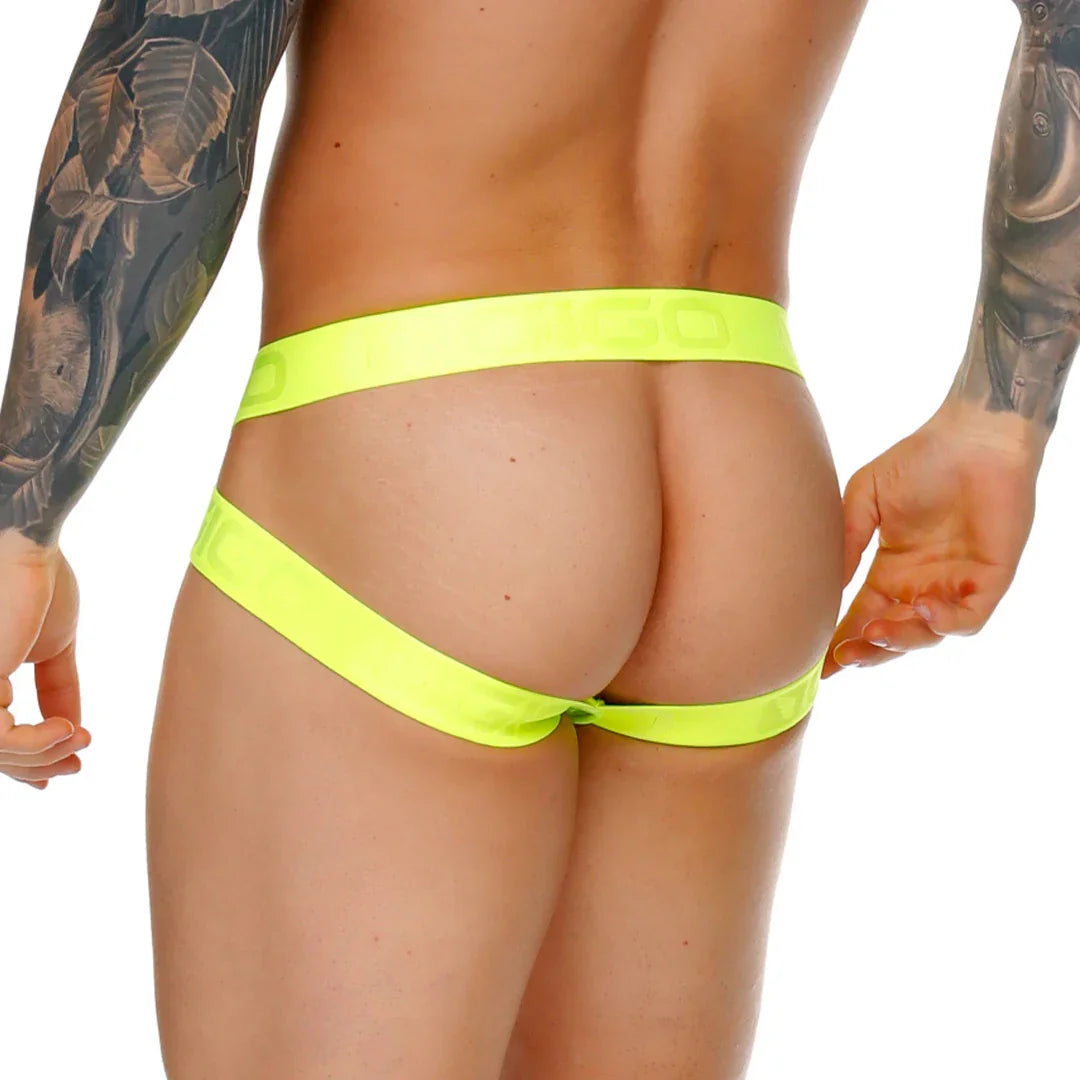
From Athletic Equipment to Men’s Underwear
The Science History Institute’s account describes the athletic supporter spreading into organized sports after Bennett’s patent. The same general shape became familiar as sports equipment and later as a style of underwear.
The jockstrap later became part of a broader athletic wardrobe. In sports contexts, protective cups and more specialized support systems entered the category. That helped separate athletic supporters from fashion underwear.
This distinction still matters today. Some jockstraps are designed for athletic or protective use. Others are fashion underwear. They may look related, but they do not always serve the same purpose.
That is why Gigo’s fashion jockstraps should be understood as underwear and style pieces, not as a replacement for sport-specific protective equipment.
A 150-Year Garment That Still Feels Current
Using BIKE’s 1874 origin date, the jockstrap marked 150 years in 2024. The milestone describes the category’s history; it does not mean that every modern version has the same construction or purpose as an early athletic supporter.
Compression shorts, briefs and modern athletic gear changed how men dress for sport. Alongside those alternatives, the jockstrap retained a recognizable silhouette that could be reinterpreted beyond sport.
The pouch, waistband and open-back structure created a shape that could move from sport into underwear, from utility into style and from hidden support into a visible design language.
Why the Shape Still Feels Modern
The jockstrap still feels current because it solves two needs at once. It can be practical, but it also looks intentional.
Most underwear styles add coverage. The jockstrap removes it. That absence is part of the design. An open back creates a distinct visual outline; less fabric alone does not guarantee greater comfort or better performance. The waistband and straps create structure without full coverage.
That contrast explains why the jockstrap continues to appear in modern underwear collections. It is not only about nostalgia or sport. It is about proportion, body framing and confidence.
The Fashion Shift: When the Jockstrap Became a Style Choice
Gay culture is part of that shift. In AP’s 2024 reporting on the jockstrap, designers and wearers describe its place in gay communities and its evolution beyond athletic equipment. This cultural history helps explain how a practical garment became a form of personal expression and fashion. It adds to the sporting story rather than replacing it.
The jockstrap became a style choice when men started wearing it for how it looked and felt, not only for athletic support. Color, waistband branding, mesh, lace, shine, contrast trims and different pouch shapes changed the category.
A clean black jockstrap can feel minimal and sharp. A bright color can feel more expressive. Mesh or lace can make the piece feel more fashion-focused. A bold waistband can turn the garment into a visible styling element.
This is where fashion jockstraps differ from purely athletic jockstraps. The goal is not to replace protective sports gear. The goal is to create underwear that feels supportive, confident and visually considered.
For that comparison, use our guide to sports jockstraps vs fashion jockstraps.
An Unexpected Design Legacy
The jockstrap also influenced another support garment. The Smithsonian’s JogBra collection record describes a prototype made from a pair of men’s jockstraps by Lisa Lindahl, Hinda Miller and Polly Palmer Smith. The record dates the start of Jogbra, Inc. to 1977 and the trio’s athletic-brassiere patent to November 20, 1979.
That detail does not make the jockstrap a sports bra, of course. But it shows how support garments can influence design thinking beyond their original category.
The connection is useful because it reveals the design logic behind the jockstrap: elastic, straps, support, movement and the need to stabilize the body without unnecessary bulk.
How Gigo Interprets the Modern Jockstrap
At Gigo Underwear, the jockstrap is treated as a design category, not as a basic afterthought. The collection includes classic jockstraps, brief jocks, fashion-led cuts, mesh effects, color stories and bolder styling options.
The important point is variety. Not every man wants the same level of exposure, support or visual impact. Some prefer a clean athletic-inspired cut. Others want color, texture or a stronger nightlife direction.
The modern jockstrap works best when the design matches the use. For everyday wear, fit and comfort should lead. For styling, color and texture can play a bigger role. For underwear-focused outfits, the waistband, straps and body lines become part of the look.

Classic Jockstrap, Brief Jockstrap and Fashion Jockstrap
The classic jockstrap keeps the most direct version of the silhouette. It focuses on the pouch, waistband and open-back straps. It is the clearest link to the original idea of front support with minimal rear coverage.
The brief jockstrap adds more front and side structure. It keeps the open-back identity but feels closer to a brief from the front. This can be easier for men who want the attitude of a jockstrap with a little more coverage.
The fashion jockstrap gives visual details a larger role. Mesh, lace, shine, stronger color, contrast trims and bold waistbands can shift the garment from basic underwear into a styling piece.
If you are deciding between the first two cuts, read Jockstrap vs Brief Jockstrap.
Why Materials Changed the Category
The earliest idea of the jockstrap was structural. Modern versions add another layer: material expression.
Fabric changes how the garment feels, photographs and fits into a wardrobe. A smooth fabric can feel clean and minimal. Mesh can create a lighter visual effect. Lace adds texture. A shiny finish can push the look toward nightlife or editorial styling.
Still, material names should not be treated as automatic promises. A fabric label alone does not prove performance, breathability or durability. The real experience depends on the garment’s construction, lining, stretch, waistband, pouch shape and fit.
That is why product photos and descriptions matter when shopping online. Look at how the waistband sits, how the pouch is shaped and how the straps connect to the body.
The Jockstrap as a Style Icon
The jockstrap became a style icon because it is visually clear. It has a recognizable shape. It does not look like a brief, trunk or boxer brief. It has its own identity.
That identity can feel athletic, minimal, sensual, fashion-forward or bold depending on the design. The same basic silhouette can move from daily underwear to a club look, from a clean black pair to a bright color statement.
This flexibility is why the jockstrap continues to evolve. The construction is old, but the styling possibilities are current.
How the Jockstrap’s History Informs Today’s Choices
The jockstrap type you choose depends on its intended use and the coverage you prefer. Athletic equipment, classic fashion jockstraps and brief jockstraps may share a visual origin, but they offer different constructions. Check the actual product description rather than treating the historical name as a performance promise.
Start with the fit. The waistband should sit securely. The pouch should support without flattening. The straps should stay in place without twisting or digging. Then choose the style direction.
For a clean look, choose simpler colors and minimal contrast. For a stronger look, explore mesh, lace, shine, bright color or a bolder waistband. For a complete outfit, pair the jockstrap with tanks, shorts or harnesses that support the same visual language.
To browse the full category, start with the Gigo Men’s Jockstraps collection.
Final Takeaway
The jockstrap has lasted because its design is both useful and expressive. It began with support and movement, then evolved into a silhouette that can carry confidence, styling and identity.
That evolution does not erase its functional origin. It makes the garment more interesting. The modern jockstrap works best when support, fit, material and visual direction all make sense together.
At Gigo Underwear, that is the point of the category: underwear that feels structured, looks intentional and gives men more ways to express their style from the first layer.
Explore the Modern Jockstrap
Discover Gigo jockstraps in classic, fashion, mesh, color and statement-driven styles.
SHOP MEN’S JOCKSTRAPS